Queen Creek Added 30,000 Residents. Your Service Area Probably Missed Them.
September 25, 2026 · The Valley Marketing Group
Queen Creek's population hit 89,770 in 2025 — a 51% jump from 59,519 in 2020. The town added more than 30,000 residents in five years. If your HVAC, pool, landscaping, pest control, or roofing company's service area is centered on Mesa or Chandler, you're competing hard for a flat market while an exploding one sits 15 miles east and barely covered.
This isn't a geography lesson. It's a math problem. A service area map built in 2020 was built for a different population distribution. Queen Creek has fundamentally reshuffled where the calls are — and most service company owners haven't reshuffled their targeting to match. The businesses that do will be grabbing first-call status in neighborhoods where there's no entrenched competition, before the national platforms notice the growth numbers and flood the category.
Where 30,000 Residents Actually Moved To
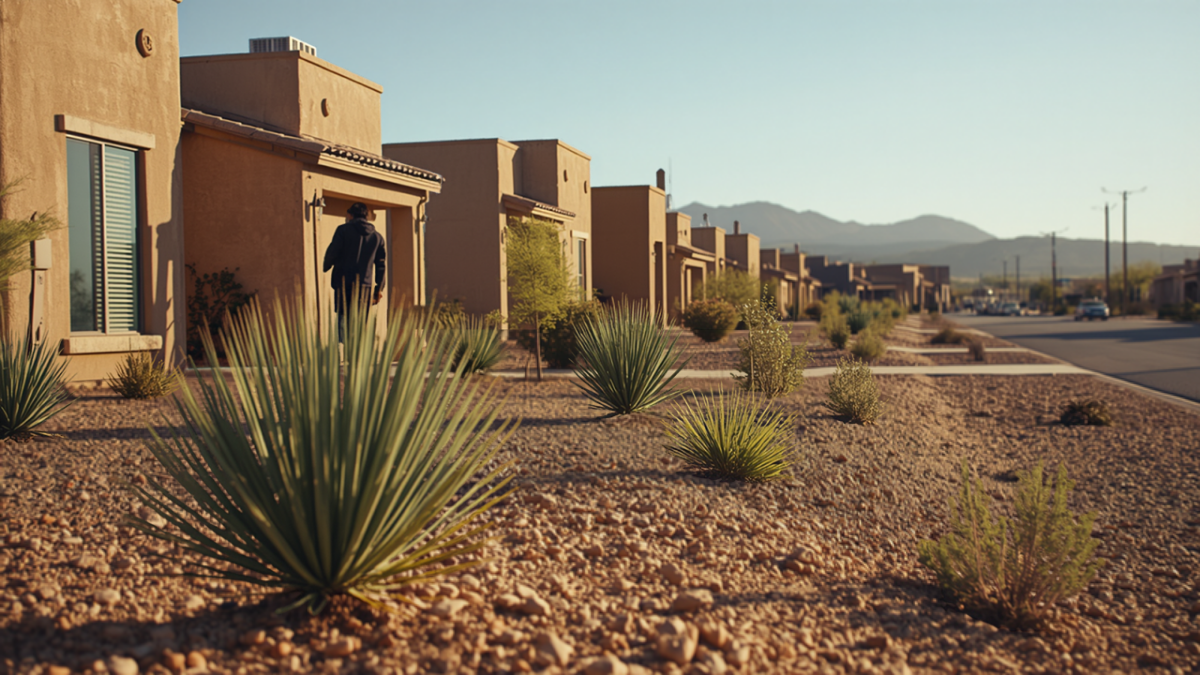
The growth in Queen Creek is not abstract census data. It's specific streets and subdivisions along the Ellsworth Road and Rittenhouse Road corridors east of Gilbert Road. Developments like Harvest, Encanterra, Madera, Crimson Crossing, and The Pecans represent thousands of households built since 2020, mostly single-family homes in the 2,000–3,500 square foot range. Those homes have HVAC systems, pools, yards, roofs, and plumbing. Their owners are new to the area, don't have an established relationship with a service company, and are actively searching for one.
According to AZ Family's analysis of U.S. Census Bureau estimates, Queen Creek saw 8.2% population growth in a single year (2024–2025), adding nearly 6,800 residents in 12 months. That's more new residents than many entire East Valley cities add in the same period.
The Service Area Map Most Companies Are Still Using
Pull up your Google Business Profile service area right now. If you set it up more than two years ago and haven't revisited it, there's a good chance it shows something like: Mesa, Gilbert, Chandler, Tempe, Scottsdale — maybe Apache Junction, maybe San Tan Valley. Queen Creek is often missing, set as a secondary add-on with low priority, or defined by a radius circle drawn from your shop in Mesa that technically clips Queen Creek's western edge but doesn't actually cover the new growth corridors.
Google uses your declared service area cities to determine when to show your listing for city-name searches. A homeowner in a Queen Creek subdivision searching "HVAC repair near me" or "pool service Queen Creek" will see listings that explicitly claim Queen Creek before they see a company that serves it but hasn't said so in their profile. The fastest fix for this is a 10-minute GBP service area update — and then validating it with a local SEO audit to confirm Google is reading it correctly.
Why Mesa and Chandler Are the Wrong Battleground
Mesa's population growth between 2020 and 2025 was modest compared to the East Valley fringe communities. Tempe is essentially built out at roughly 195,000 residents with little room to expand. Chandler's growth has also slowed as it runs out of developable land. The service call density in those markets hasn't dropped, but the competition for those calls is extremely high — every national franchise, every 20-year incumbent company, and every Google Local Services Ads slot is contested hard.
In Queen Creek, the market density is lower and the competition is thinner. There are fewer entrenched players, fewer established review profiles for competing local businesses, and a large population of newer homeowners who haven't locked in a preferred vendor for anything yet. That's the category entry window — and it closes as the market matures and early movers accumulate the review counts and ranking authority that make them sticky.
How Google Reads Your Service Area — and Where Most Companies Get It Wrong
Google Business Profile determines your local search visibility through three layers: your declared service area cities, the geographic origin of your reviews, and proximity signals from your website content. If you declare Queen Creek as a service area but have zero reviews from Queen Creek customers and no Queen Creek content on your website, Google will rank you there cautiously. The formula is:
- Declared service area city — necessary but not sufficient.
- Reviews from that city's ZIP codes — the 85140 and 85142 ZIP codes for Queen Creek carry direct weight. A handful of reviews from verified Queen Creek addresses outperform a generic radius setting.
- Website content mentioning the city — a service page, a case study, or a location-specific blog post for Queen Creek tells Google you actually serve it, not just that you included it on a dropdown.
- Google Local Services Ads targeting — separate from GBP, your Local Services Ads targeting should explicitly include Queen Creek and its ZIP codes as priority locations, not just as part of a radius from your shop.
Google Ads Location Targeting: The Queen Creek Blind Spot
For businesses running Google Ads, the service area problem shows up differently. Search campaigns targeting "East Valley" or using location radius from a Mesa address typically underweight the eastern corridor because bid density is lower there — the algorithm allocates budget where it sees higher historical conversion density. That usually means Mesa and Chandler get the impressions and Queen Creek gets whatever budget is left.
Fix this by creating a Queen Creek-specific ad group or campaign with explicit location targeting for 85140 and 85142 ZIP codes, separate from your broader East Valley campaign. This lets you analyze cost-per-lead in that market independently and bid correctly for a less contested auction. The cost to run this through an agency is typically recaptured in lower CPLs because you're not fighting the full Mesa competitive field for every impression. For a deeper view of what a well-structured service area campaign looks like, our AI-driven Google Ads management handles this kind of geographic segmentation automatically.
Want more like this?
Get our monthly newsletter — real marketing tips for service businesses. No fluff, unsubscribe anytime.
Ready to talk now? Get a free 24-hour audit instead →The Appointment Booking and Follow-Up Layer
Landing the Queen Creek call is step one. The second problem service companies run into in newer markets is conversion — homeowners in growing suburbs have often just moved from out of state and are calling multiple providers at once. Speed-to-answer and speed-to-book determine who gets the job, not just who showed up in search. Companies still using a single phone line during business hours lose to competitors with 24/7 AI voice receptionist coverage that can schedule appointments instantly.
In a market where the customer has no brand preference yet, the first company to answer and book the appointment wins the job — and typically wins the review, the repeat call, and the referral to the neighbor. That compounding effect is why the first 12–18 months in a newly growing market matters more than the following five years.
Three Actions to Take This Week
If you're a service business in the East Valley and you haven't updated your targeting for Queen Creek's growth:
- Update your GBP service area to explicitly include "Queen Creek" as a declared city, not just a radius overlap. While you're there, add San Tan Valley — it just became a real town as of September 2025 and belongs on every East Valley service list.
- Create a Queen Creek service page on your website — even a single 500-word page targeting "HVAC repair Queen Creek" or "pool service Queen Creek AZ" gives Google a content signal to match your GBP declaration. Without it, your area claim lacks corroboration.
- Run a ZIP-code report in Google Ads — pull your last 90 days of Search campaign data by ZIP code. If 85140 and 85142 are generating impressions but low conversion, it usually means the landing page or phone coverage is the bottleneck, not the ad.
Your Service Area Map Is Probably Pointed at the Wrong City
We'll audit your Google Business Profile service area, your Google Ads location targeting, and your local search visibility across Queen Creek and the rest of the East Valley — and show you exactly where you're leaving calls on the table. This is free. No contract, no retainer required to get the audit. Request your free audit here, or see our flat-rate pricing if you're ready to fix it. You can also call Joshua directly at (623) 343-3141.
Frequently Asked Questions
- Q: How fast is Queen Creek actually growing compared to other East Valley cities?
A: Queen Creek grew 51.4% between 2020 and 2025 — from 59,519 to 89,770 residents — making it one of the fastest-growing communities in the entire country during that period, according to U.S. Census Bureau estimates cited by AZ Family and the Queen Creek Independent. - Q: My service radius already covers Queen Creek on the map. Why isn't that enough?
A: Google's local ranking algorithm weighs explicit city name declarations more heavily than radius overlap. A radius circle that clips the edge of a ZIP code doesn't tell Google you actively serve that city — a declared service area city entry does. Use both, but the city name entry is what drives city-name search visibility. - Q: Does it make sense to invest in Queen Creek before I'm established in Mesa and Chandler?
A: Yes — specifically because Mesa and Chandler are saturated and Queen Creek is not. You're not choosing one or the other. You're deciding whether to spend additional marketing dollars contesting a crowded auction or entering a growing market early. The economics favor the growing market for a service business without dominant incumbent status. - Q: What's the fastest way to get Queen Creek reviews to reinforce my service area?
A: The shortest path is a direct review request to every Queen Creek customer you've already served. Pull your job history, filter by ZIP code 85140 and 85142, and send a direct text or email asking for a Google review. Three to five reviews from those ZIPs creates a meaningful location signal within 30 days. - Q: Is Queen Creek in Maricopa County or Pinal County?
A: Queen Creek spans both. The majority of the developed residential areas are in Maricopa County, but portions extend into Pinal County. This matters for contractor licensing — Pinal County has different contractor registration requirements than Maricopa County, and businesses serving both sides of the town line need to verify their license coverage.
Sources
- AZ Family — Queen Creek is Arizona's fastest-growing town, May 2025
- ABC15 — Queen Creek sees highest year-over-year percentage growth in the Valley
- Queen Creek Independent — Queen Creek remains one of nation's fastest-growing cities
- Arizona Capitol Times — Several Valley cities grew faster than Phoenix, December 2025
Everything Valley Does
AI marketing agents and full website builds — all under one roof.
Serving service businesses across the Phoenix Valley
Free tools
How Valley Can Help
We Help Businesses Like Yours Get More Leads — and Close More of Them
The Valley Marketing Group is a Phoenix-based marketing agency specializing in AI-powered lead generation, paid advertising, and web development for local service businesses.
- Google Ads & paid search — campaigns built to generate qualified leads, not just clicks
- AI phone receptionist — never miss a call or lead while you're on the job
- Website design & development — WordPress, Webflow, Shopify, WooCommerce
- SEO content & local search — rank for the searches your customers are already making
Not Showing Up in Local Search?
We'll check your Google Business Profile, local rankings, and citations — and show you exactly what's holding you back from the map pack.
No generic report. No obligation.
Check My Local SEO