Mesa Roofers Are Losing Emergency Calls to Competitors Who Started Running Ads in April
September 28, 2026 · The Valley Marketing Group
Every Mesa roofing contractor knows monsoon season (July–September) is when the calls come in. What most do not know is that the contractor picking up those calls started running Google Ads three months before the first storm hit.
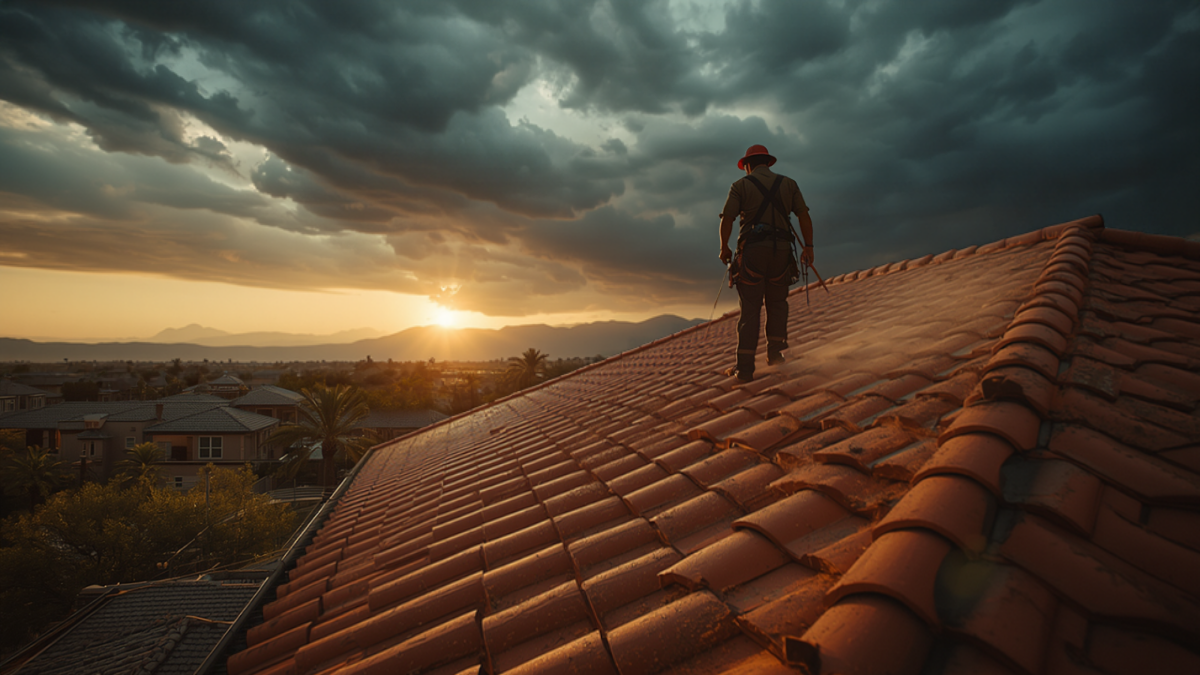
Mesa takes a beating before the rain even arrives. Months of 110°F heat dry out underlayment, crack tile adhesive, and degrade flashing seals around vents and skylights. Arizona Roofing Systems notes that "the roof takes a beating long before a storm arrives" — the damage is cumulative, and the monsoon is just when homeowners see it in the form of water on their ceiling. That is your emergency call. But showing up at the top of Google on the night of a storm is not something you can arrange on the day the storm happens.
Want a free audit of your own site?
Send us your website and we will review your Google, website and lead tracking, then email you what to fix first. No pitch.
Free. Read-only. We change nothing on your site.Why Starting Ads in July Costs You 40% More Per Lead
Google Ads rewards campaign history. Every day your campaign runs, Google learns which ad copy variants drive calls, which keywords convert into booked jobs, and which landing page setups produce phone submissions versus bounces. That learning feeds into your Quality Score — a 1-to-10 rating Google assigns to your ads that directly determines your cost per click.
A roofing campaign launched cold in late June or early July faces two problems at once: maximum competition as every other roofer in Mesa increases spending, and minimum Quality Score because there is no history for Google to reference. The result: national benchmarks show roofing Google Ads cost per lead spikes to $300 or more in peak storm months, while campaigns that entered the season with established history maintain $130–$180 CPL on the same or lower budgets.
That difference is not trivial. On a $3,000 monthly ad budget, the gap between $150 CPL and $300 CPL is 20 leads versus 10. In a monsoon that delivers 30 or 40 roofing emergency calls to whoever ranks highest, that is the difference between filling your calendar and watching a competitor fill theirs. A free campaign audit shows you where your current Quality Score and CPL stand, and what it would take to enter next season in a better position.
Mesa's Housing Stock: Why the Emergency Volume Is Real
Mesa is not a uniform roofing market. West Mesa — neighborhoods like Dobson Ranch, Lehi, and the Alma School Road corridor — has dense concentrations of homes built between 1970 and 1995. East Mesa, from Power Road toward Eastmark, has newer construction. That split matters for roofing because the pre-2000 homes are hitting major replacement windows right now.
Tile roofs installed in the late 1980s and 1990s have a 25–30 year functional lifespan. In 2026, those homes are 30 to 35 years old. The underlayment beneath the tile fails well before the tile itself shows visible damage — so the homeowner does not see the problem until monsoon rain comes through the ceiling. That is your emergency call. And emergency roof replacement is the highest-value job in the category, with average project values in central Mesa running $8,000–$18,000 for full tile replacement on a 1,800–2,400 square foot home.
If you are running Google Ads across all of Mesa with equal bid distribution, you are diluting budget across East Mesa ZIPs with newer construction and lower replacement urgency. Concentrating budget on ZIP codes 85202, 85203, 85204, and 85210 — where pre-2000 housing density is highest — improves conversion rate and lowers CPL. Check the Mesa market page for a breakdown of how we segment campaigns by Mesa's east-west divide.
The Pre-Season Google Ads Calendar for Mesa Roofers
Here is what the contractors who dominate monsoon season do in the months before the first storm:
April: Launch at a Sustainable Baseline
Run at $800–$1,200 per month on core replacement and inspection keywords: "roof replacement Mesa," "tile roof repair Mesa AZ," "roofing contractor Mesa," "roof inspection Mesa." Search volume is low in April. You will not spend much. What you are buying is campaign age and conversion data — the inputs Google uses to calculate Quality Score. Every week your campaign runs without a major performance event is a week of compounding advantage going into summer.
May: Test and Optimize Before the Volume Hits
By May you have 4–6 weeks of real data. Identify which ad copy variant has the highest call-through rate. Identify which keywords are converting at the best CPL. Build or tighten your landing page around those themes — response time, local Mesa expertise, emergency availability. 99calls' 2026 roofing benchmark data shows that pre-season campaigns with 20 or more conversions recorded before June 1 enter peak season with CPLs 35–45% below contractors starting cold in summer.
June: Scale Incrementally as Pre-Storm Demand Builds
Increase budget to $2,500–$4,000 per month. Add emergency keywords: "emergency roof repair Mesa," "roof leak repair same day," "roof damage inspection Mesa." Pre-monsoon heat picks up in June and homeowners start noticing ceiling stains, cracked tiles, and flashing separations that have been slowly failing all spring. Your campaign now has history — Google is not penalizing you with poor placement or inflated minimum bids.
July–September: Run at Full Budget During the Storm Window
Now you are at $3,500–$6,000 per month, competing against contractors who launched their campaigns in July. You have the Quality Score advantage, the ad history advantage, and 10–15 five-star reviews from jobs you closed in May and June. Your CPL is $150–$200. Their CPL is $300–$400. You win on volume, on margin, and on the review signal that feeds back into next year's ranking.
LSAs vs. Google Search Ads for Mesa Roofing
Google Local Service Ads appear above standard Google Ads in search results — above the ads most roofing contractors are running. For roofing in Arizona, LSA cost per lead runs $65–$90 during the off-season and $120–$175 during peak storm months. That is generally lower than cold-start search campaigns during peak demand.
The catch: LSAs require a background check and Google verification process that takes 3–6 weeks. If you have not started, start this week. You will not have a verified LSA listing in time for monsoon if you apply in June. You also need a minimum review count for competitive LSA placement — fewer than 20 reviews and you will appear in the LSA section but rank at the bottom.
The right setup for most Mesa roofers: both channels together. Use LSAs for top-of-page placement and better cost-per-lead efficiency. Use Search Ads to capture specific keywords LSAs do not cover — competitor names, specific service modifiers ("clay tile repair Mesa"), and emergency searches that happen after business hours when LSAs are paused. Running both produces more total lead volume and costs less per lead than either channel alone.
Want a free audit of your own site?
Send us your website and we will review your Google, website and lead tracking, then email you what to fix first. No pitch.
Free. Read-only. We change nothing on your site.After the Call: Why Speed to Follow-Up Determines Whether You Book the Job
During a monsoon event, a homeowner searching for roof repair is simultaneously texting three roofing companies and calling two more. The contractor who responds within five minutes of the inquiry gets the appointment. The ones who respond two hours later get "we already found someone, thanks."
Most roofing companies have no automated follow-up. The lead comes in, sits in an email inbox, and gets called the next morning. By then, the homeowner has booked with whoever was fastest. An automated follow-up sequence sends an immediate text confirmation, schedules a call, and keeps the lead engaged while your team is on the roof. During a multi-day monsoon event, this system alone generates 20–30% more booked jobs from the same lead volume.
What to Do Right Now If Monsoon Is Weeks Away
If monsoon season is approaching and you have not started your campaign, you are behind but not out. Here is the fastest path to a working setup:
- Launch a campaign this week at whatever budget you can sustain through October. Even $500/month builds Quality Score. A cold campaign in June is better than no campaign in July.
- Apply for LSA verification immediately. Every week of delay is map pack placement you are giving competitors.
- Build one dedicated landing page for emergency roof repair — not your homepage. Phone number above the fold, same-day availability messaging, your Mesa neighborhood expertise, and a short form. Test it for mobile first; most monsoon storm searches happen on phones.
- Set up a text-based lead response so inquiries that come in after 5 p.m. get an immediate reply. During a storm, response time determines who books the job.
Review our campaign packages and pricing to see what a full Mesa roofing setup costs and how fast we can get it live.
Get a Free Mesa Roofing Ads Audit Before the Next Storm Season
We will pull your current Google Ads performance (or build you a competitor benchmark from scratch), identify your Quality Score gaps, and show you exactly what pre-season setup costs versus what showing up cold to monsoon costs. Request your free audit here, review our pricing, or call Joshua directly at (623) 343-3141.
Sources
Everything Valley Does
AI marketing agents and full website builds — all under one roof.
Serving service businesses across the Phoenix Valley
Free tools
How Valley Can Help
We Help Businesses Like Yours Get More Leads — and Close More of Them
The Valley Marketing Group is a Phoenix-based marketing agency specializing in AI-powered lead generation, paid advertising, and web development for local service businesses.
- Google Ads & paid search — campaigns built to generate qualified leads, not just clicks
- AI phone receptionist — never miss a call or lead while you're on the job
- Website design & development — WordPress, Webflow, Shopify, WooCommerce
- SEO content & local search — rank for the searches your customers are already making
Google Ads Causing Trouble?
We'll look at your Google Ads account for free and show you where budget is being wasted, what needs fixing, and where the best opportunities are.
No generic report. No obligation.
Get My Free Audit