
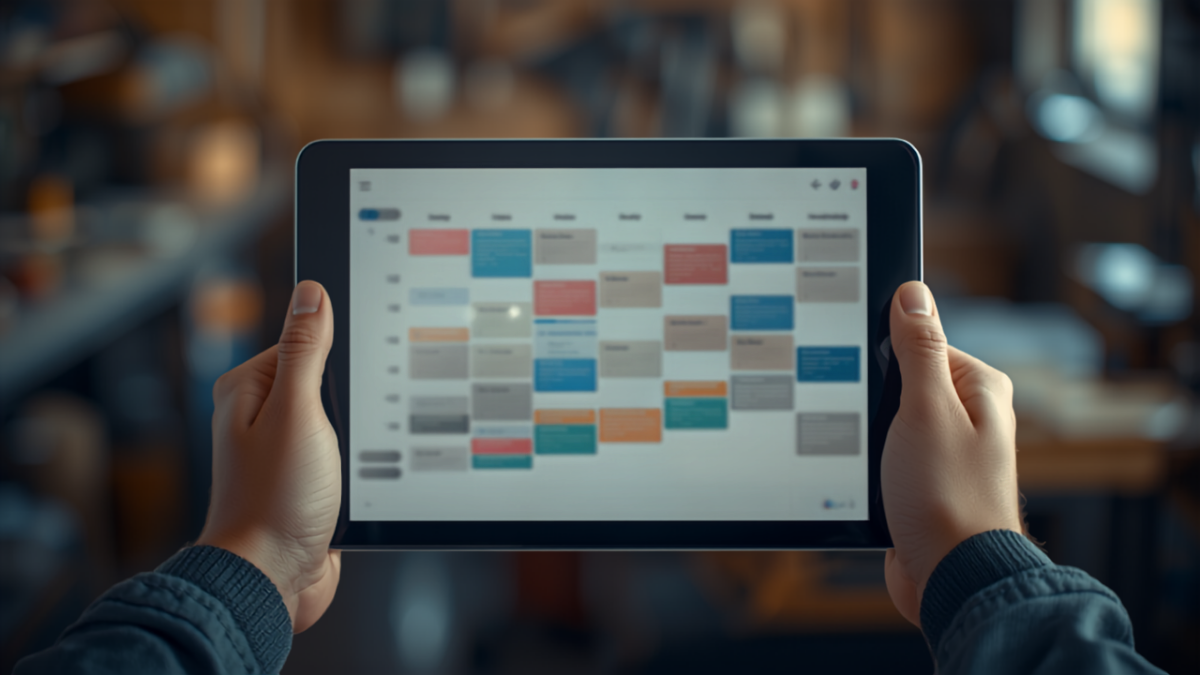
Appointment Scheduling Automation: Is It Worth It for Service Businesses?
September 2, 2026 · The Valley Marketing Group
Your average no-show costs you more than just a missed appointment — it costs you the slot you couldn't fill, the drive time you can't recover, and the follow-up call the customer won't answer.
For service businesses running on tight schedules — dental practices, med spas, HVAC inspection programs, salons, legal consultation firms — no-shows are one of the most quietly expensive problems in the operation. Unlike rising ad costs or slow seasons, this one is almost entirely fixable. Here's how appointment scheduling automation actually works, what it costs, and whether the numbers make sense for your business.
The No-Show Problem by the Numbers
The average no-show rate across appointment-based service businesses sits between 20% and 25%, according to SchedulingKit's 2026 industry data. Dental practices and healthcare businesses without reminder systems run closer to 27-30%. That means roughly one in four booked appointments doesn't show — a significant revenue gap on top of a scheduling headache.
For a med spa doing 15 appointments per day at an average ticket of $280, a 22% no-show rate represents roughly $924 in missed revenue per day before any recovery. For an HVAC company with 80 booked maintenance visits per month at $160 per visit, the same rate costs over $2,800 monthly.
What Automated Reminders Actually Do
The core function of appointment scheduling automation is straightforward: it contacts booked customers before their appointment, confirms they're still coming, and makes rescheduling easy if they're not. That last part matters. A customer who cancels 24 hours out is far more useful than one who just doesn't show — you can fill the slot.
Research cited by Appointment Reminder from the Journal of Medical Internet Research found that automated reminders sent 24-48 hours before an appointment reduced no-shows by 29% on average. More advanced two-way confirmation systems — where the customer actively confirms or reschedules via text, and the calendar updates automatically — show reductions up to 42% in no-show rates, according to SchedulingKit's data.
The Manual Scheduling Time Sink
The second problem scheduling automation solves is time. Specifically, the hours your staff spends calling, texting, and chasing confirmation for appointments a system could handle automatically.
For most service businesses in the 5-20 employee range, manual scheduling and confirmation calls consume 10-20 hours per week across front-desk or admin staff. That's before counting the back-and-forth when someone needs to reschedule, or the missed calls that turn into voicemail chains.
That time has a dollar value. At $18/hour for a front-desk role, 15 hours per week of manual scheduling and confirmation work is roughly $14,000 per year in labor — before counting what gets missed when a confirmation call doesn't happen and the no-show hits anyway.
What AI Scheduling Actually Does
Modern appointment scheduling automation goes beyond a reminder text. A properly configured system handles:
- Online self-booking: Customers schedule directly from your website or Google Business Profile. The slot is booked, confirmed, and synced to your calendar automatically — no phone call required.
- Multi-point reminders: SMS and email at 48 hours, 24 hours, and morning-of — each with a one-tap confirm or reschedule option. Stacked reminders outperform single reminders significantly.
- Two-way communication: When a customer responds to a reminder with a question, the system handles common ones and escalates anything complex to your team.
- Cancellation recovery: When a customer cancels, the system automatically notifies waitlisted customers or reopens the slot to online booking — so the hour doesn't go dark.
- Post-appointment follow-up: After the visit, the system sends a review request, a rebooking prompt for recurring services, or a maintenance reminder — automatically, on whatever cadence you set.
Our appointment scheduling automation handles all of this and integrates with most calendar systems and field service management software.
Want more like this?
Get our monthly newsletter — real marketing tips for service businesses. No fluff, unsubscribe anytime.
Ready to talk now? Get a free 24-hour audit instead →The Math: Does It Pay for Itself?
Take a plumbing company doing 80 booked service visits per month, average ticket of $320. At a 22% no-show rate without reminders, that's roughly 18 missed appointments per month. A 40% reduction from automated reminders recovers 7 of those — $2,240 per month in revenue that was going to waste.
Most AI scheduling tools built for service businesses run $100-300 per month. Verified Market Research values the appointment scheduling software market at $332.8 million in 2024, growing rapidly as small and mid-size service businesses adopt automation. The math on no-show recovery alone usually covers the cost. The time savings and post-appointment follow-up are on top of that.
Pair scheduling automation with a follow-up sequence for no-shows — a same-day text offering to reschedule, a 3-day follow-up if they don't respond — and your recovery rate improves further. For businesses handling a high volume of inbound booking calls, an AI voice receptionist can take those calls after hours and on weekends without adding headcount.
Is It Right for Your Business?
Scheduling automation pays off fastest for businesses that:
- Have 15+ appointments per week — enough volume for the math to matter
- Sell recurring services (annual HVAC tune-ups, quarterly pest control, regular dental cleanings, monthly salon visits)
- Currently confirm appointments manually through phone calls or staff texts
- Have a front desk role that's consistently stretched thin
It's less impactful for businesses doing primarily emergency or reactive work — emergency plumbing, urgent HVAC repair calls — where most jobs aren't pre-scheduled and the bottleneck is dispatcher availability, not reminder sequencing.
For a look at what it costs to generate those appointments through paid advertising in the first place, see the breakdown of Google Local Services Ads cost per lead in 2026. When you know what you paid to book the appointment, the case for not losing it to a no-show gets a lot stronger.
If you want to see what a scheduling automation setup would look like for your specific business — and whether the math works out — book a free 24-hour audit and we'll walk through it with you.
Want to know what is actually broken on your site?
We audit your website, your Google Business Profile and your ad account, then send you a written report inside 24 hours. No pitch, no pressure — you get the plan whether you hire us or not. Start your free audit, see what we charge, or call (623) 343-3141 and talk to a person.
We are based in Phoenix and work with service businesses across the Valley — Mesa, Gilbert, Chandler, Tempe, Scottsdale and Phoenix.
Sources
Everything Valley Does
AI marketing agents and full website builds — all under one roof.
Serving service businesses across the Phoenix Valley
Free tools
How Valley Can Help
We Help Businesses Like Yours Get More Leads — and Close More of Them
The Valley Marketing Group is a Phoenix-based marketing agency specializing in AI-powered lead generation, paid advertising, and web development for local service businesses.
- Google Ads & paid search — campaigns built to generate qualified leads, not just clicks
- AI phone receptionist — never miss a call or lead while you're on the job
- Website design & development — WordPress, Webflow, Shopify, WooCommerce
- SEO content & local search — rank for the searches your customers are already making
Missing Calls and Leads?
We'll show you exactly how many calls and leads you're losing right now, and what an AI agent would recover for your business.
No generic report. No obligation.
Get My Free Audit