The Win-Back Campaign Service Businesses Aren't Running (But Should Be)
June 17, 2026 · The Valley Marketing Group
Every service business has a list of past customers who paid, were happy, and then stopped calling. They didn't go to a competitor. They just didn't come back. A reactivation campaign changes that — and costs far less than chasing new customers.
Industry data consistently shows that reactivating an existing customer costs five to seven times less than acquiring a new one. Yet most HVAC companies, plumbers, electricians, and contractors spend nearly all their marketing budget on new customer acquisition and run zero systematic campaigns to bring back people who already trusted them enough to hire them once. That gap between what businesses do and what makes the most economic sense is where a win-back campaign lives.
Want a free audit of your own site?
Send us your website and we will review your Google, website and lead tracking, then email you what to fix first. No pitch.
Free. Read-only. We change nothing on your site.What a Win-Back Campaign Actually Is
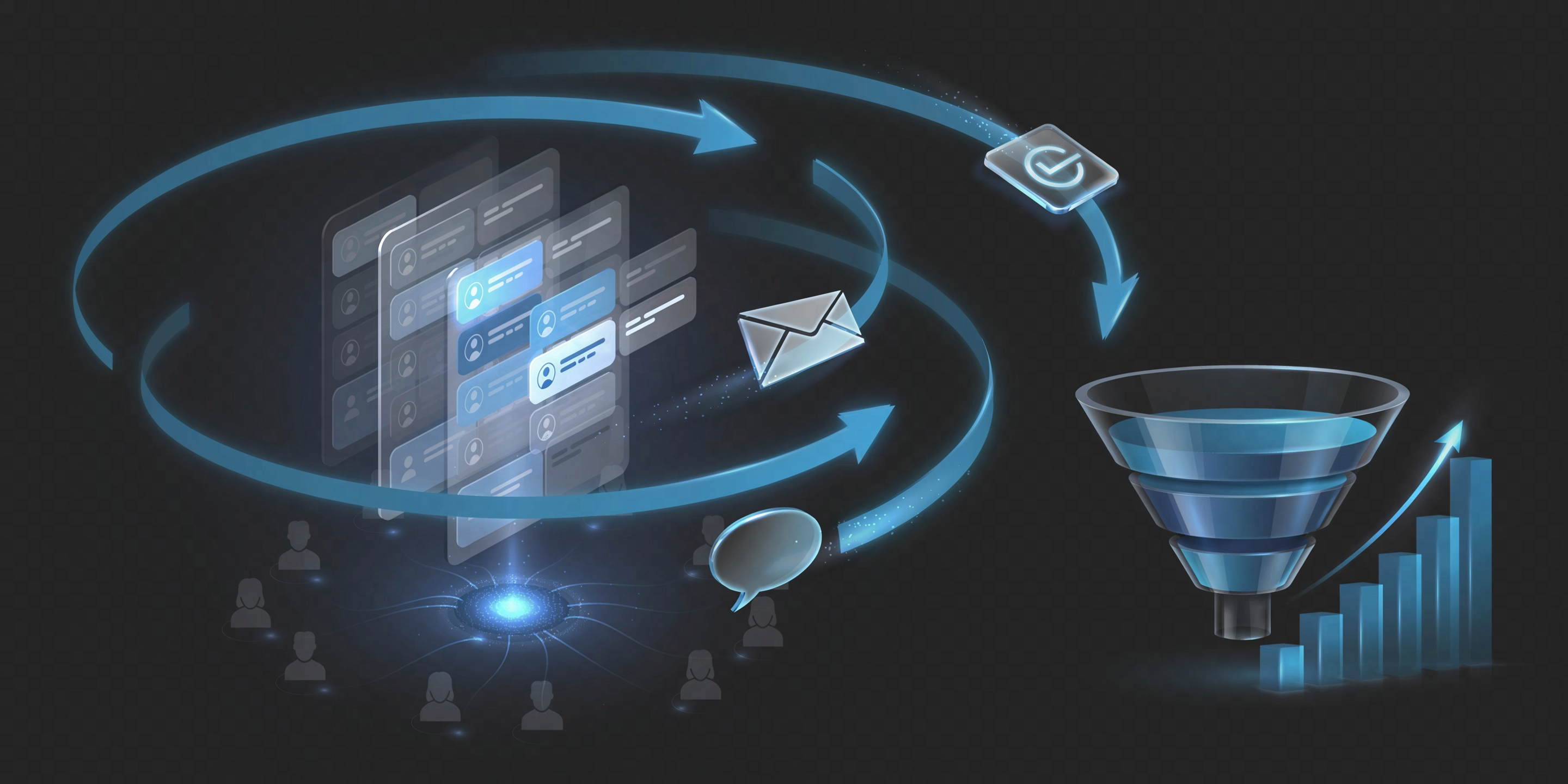
A win-back campaign is an automated sequence of messages — typically email, SMS, or both — that triggers when a past customer crosses a time threshold without rebooking. For a dental office, that threshold might be six months. For an HVAC company, it might be eighteen months. For a plumber, it might be two years, since most plumbing problems aren't predictable.
The goal isn't aggressive selling. It's to appear in front of a person who already has positive associations with your business before they open Google and find your competitor instead. Done right, this is the least expensive revenue-generating campaign a service business can run.
When a Customer Is "Lapsed" in Your Trade
The timing threshold varies by business type:
- Dental and med spa: 6 months. These are services with predictable cadences — cleanings, skin treatments — and six months is a natural re-engagement window before the patient is truly gone.
- HVAC: 12 months, timed to the season. If a customer had AC service in July 2024 and hasn't rebooked by April 2026, they're a prime candidate for a pre-summer tune-up campaign.
- Plumbing: 18–24 months. Plumbing is episodic — people don't schedule regular pipe maintenance — so win-backs here focus on general checkup offers, water heater inspections, or drain cleaning deals.
- Contractors and remodelers: 12–18 months. The target message often pivots to referrals: "Looking for your next project? Know anyone we should meet?"
- Pest control and lawn care: 6 months. These are recurring-service businesses where a gap often means the customer quietly moved to a competitor.
A Three-Message Sequence That Works
A basic win-back sequence for an HVAC company might look like this:
Message 1 — Email, Day 0: "It's been a while — summer is coming up and we're scheduling AC tune-ups now. As a past customer, you go to the front of the line." No discount, no pressure. Just a reminder you exist with a clear call to action.
Message 2 — SMS, Day 7: Short follow-up. "Hey [Name], just following up on the AC tune-up email. We still have openings this week. Reply YES and we'll get you on the schedule." Direct, uses their first name, minimal friction.
Message 3 — Email, Day 14: Specific offer. "Past customers get $30 off any AC service this month. Offer expires June 30." The discount is reserved for the third message, after organic interest hasn't converted. This is the "close" message for people who are interested but haven't pulled the trigger.
The sequence stops automatically the moment someone books. You never want to keep messaging a customer who already said yes.
Why This Converts Better Than New Prospect Campaigns
Research compiled by Omnisend analyzing over 24 billion automated emails found that lapsed-customer reactivation flows achieve open rates of around 33% — well above the typical 20–25% for standard marketing emails. That performance differential exists because the recipient already knows your company. You're not an unknown sender asking for trust. You're a reminder of a positive experience.
According to Shopify's win-back campaign research, the average success rate for well-executed reactivation campaigns runs 20–40%. In direct-response marketing terms, that's remarkably high for a sequence that runs with zero ongoing manual effort.
The Automation Setup
Manual win-back campaigns — where someone on your team periodically checks the list and sends messages — almost never run consistently. The economics only work at scale when the process is automated.
A properly configured CRM automation system watches your job completion records and automatically adds customers to a reactivation sequence when they cross the time threshold you define. Once built, it runs indefinitely without anyone needing to remember to trigger it.
The setup connects your CRM — ServiceTitan, Jobber, HousecallPro, or similar — to your email and SMS tools, sets the time thresholds per service category, and fires the 3-message sequence automatically. The only ongoing management is reviewing the numbers monthly and adjusting your offer when response rates drop.
The Data Problem: What If You Don't Have Their Contact Info?
Win-back campaigns require you to have email addresses and phone numbers for your past customers. Many service businesses have the phone number — customers called you — but not the email. If your team hasn't been collecting email addresses at booking, job completion, or invoice delivery, that's step zero.
Going forward: add email collection to your booking form, your invoice, and your post-job survey. Going backward: a short SMS to your existing customer list asking for their email in exchange for a discount can recover a meaningful portion of missing addresses. An automated post-job follow-up sequence can collect email addresses passively as part of the standard job-close process without anyone on your team manually doing it.
Want a free audit of your own site?
Send us your website and we will review your Google, website and lead tracking, then email you what to fix first. No pitch.
Free. Read-only. We change nothing on your site.Turning Win-Backs Into Referrals
Not every customer on your reactivation list needs your service right now. But they may know someone who does. One of the highest-converting message variants in a win-back sequence isn't "come back to us" — it's "who do you know?"
"We're taking on new customers in [neighborhood] this summer. If you know anyone whose AC is giving them trouble, send them our way and we'll take care of them right." Referred leads close at significantly higher rates than cold leads from Google Ads, and the cost of generating them is the cost of one text message.
What This Costs vs. What It Returns
An email and SMS sequence for 500 past customers costs a few cents per contact in platform fees and maybe two to four hours of setup time. A single reactivated job in HVAC, plumbing, or contracting can be worth $300–$5,000+. At even a 5% reactivation rate, 500 customers generates 25 jobs from one campaign that runs automatically every month going forward.
Compare that math to Google Ads, where you might pay $50–$150 per lead for a customer who has never heard of you and has no reason to trust you over the next result. The win-back campaign uses a list you already own, contacts people who already paid you, and costs almost nothing to run once it's built.
Getting It Running
If you have a CRM with past customer data and you're not running a reactivation campaign, you're leaving money on the table every month. The list exists. The audience is warm. The cost is low. This is the closest thing to free revenue growth available to a service business.
If you want to see how a win-back system would work for your specific trade and customer database, book a free 24-hour audit. We'll look at your CRM setup, your list quality, and show you exactly what a realistic reactivation campaign produces in your market.
Want to know what is actually broken on your site?
We audit your website, your Google Business Profile and your ad account, then send you a written report inside 24 hours. No pitch, no pressure — you get the plan whether you hire us or not. Start your free audit, see what we charge, or call (623) 343-3141 and talk to a person.
We are based in Phoenix and work with service businesses across the Valley — Mesa, Gilbert, Chandler, Tempe, Scottsdale and Phoenix.
Sources
- Omnisend — Reactivation Emails: 2024 Data from 24 Billion Automated Emails
- Shopify — Win-Back Campaigns: 7 Strategies to Re-Engage Lapsed Customers
- Hashmeta — Reactivation Campaigns: Winning Back Lost Customers Through Strategic Re-Engagement
Related reading
Everything Valley Does
AI marketing agents and full website builds — all under one roof.
Serving service businesses across the Phoenix Valley
Free tools
How Valley Can Help
We Help Businesses Like Yours Get More Leads — and Close More of Them
The Valley Marketing Group is a Phoenix-based marketing agency specializing in AI-powered lead generation, paid advertising, and web development for local service businesses.
- Google Ads & paid search — campaigns built to generate qualified leads, not just clicks
- AI phone receptionist — never miss a call or lead while you're on the job
- Website design & development — WordPress, Webflow, Shopify, WooCommerce
- SEO content & local search — rank for the searches your customers are already making
Missing Calls and Leads?
We'll show you exactly how many calls and leads you're losing right now, and what an AI agent would recover for your business.
No generic report. No obligation.
Get My Free Audit