
AI Agent for CRM: How It Automates Lead Follow-Up for Service Businesses
May 25, 2026 · The Valley Marketing Group
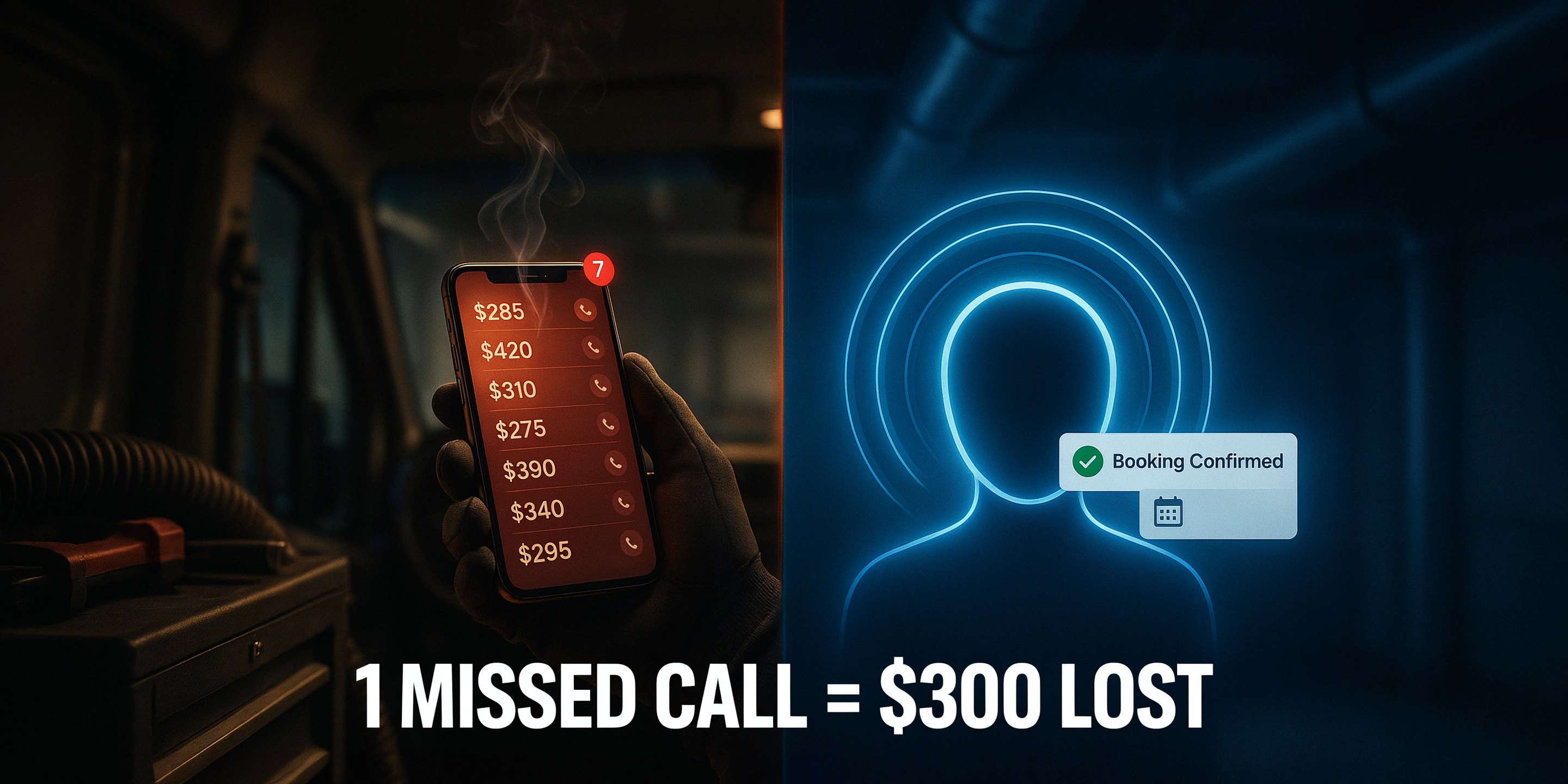
Most home-service businesses don't have a lead-generation problem. They have a lead-handling problem. The quotes are coming in from Google, from form fills, from the phone — but a busy week buries a hot prospect three rows deep in the CRM, nobody follows up by Tuesday, and the homeowner books with whoever called back first. An AI agent that works inside your CRM exists to make sure that never happens.
An AI agent for CRM is software that connects to your customer relationship management system and automatically performs the lead-handling work a human normally would — logging new inquiries with clean data, routing them to the right person, updating pipeline stages, and triggering follow-up by text and email until the lead responds or books. This guide covers what that looks like day to day for an HVAC, plumbing, or contracting business, where it differs from the broad CRM automation playbook, and how to decide whether it's worth setting up.
Why the CRM itself isn't the problem
CRMs already pay for themselves on paper. Nucleus Research found that CRM software returns an average of $8.71 for every dollar spent, and Salesforce reports that CRM adoption can increase sales by up to 29% and sales productivity by up to 34%. Yet most service-business owners feel like their CRM is a glorified contact list. Why?
Because the value only shows up when the system is actually worked — when every lead is entered, every stage is current, and every follow-up goes out on time. That is exactly the work that falls apart when your crew is in the field, the phone is ringing, and it's 6pm on a Friday. The gap isn't the software. It's the gap between "lead arrives" and "someone acts on it."
The speed-to-lead gap
That gap is expensive. The landmark Lead Response Management study (Oldroyd, with MIT and Kellogg researchers) found that responding to a web lead within 5 minutes versus 30 minutes makes you 100x more likely to make contact and 21x more likely to qualify the lead. For a plumbing company juggling jobs across the Valley, a five-minute response window is nearly impossible to hit by hand. An AI agent closes it to seconds — for an even deeper look at why those first minutes decide the job, see our breakdown of speed-to-lead for service businesses.
What an AI CRM agent actually does
This is the practical, unglamorous work that decides whether your pipeline produces booked jobs. A well-configured agent handles:
- Data entry and clean-up. Every call, form fill, and ad lead is logged into the CRM with consistent fields — name, service type, address, source — so you're not retyping or guessing later.
- Lead routing. New inquiries are sorted to the right person or queue by service type, location, or urgency. An emergency no-heat call routes differently than a "thinking about a remodel next spring" form.
- Follow-up. The agent sends a timed sequence of texts and emails until the lead replies or books, then stops automatically. No more leads that got one voicemail and were forgotten.
- Pipeline hygiene. Stages update as leads reply, schedule, or go quiet — so the pipeline reflects reality instead of last month's wishful thinking.
- Re-engagement. Old "lost" leads get surfaced and re-touched, recovering quotes you already paid to generate.
The quiet win: The biggest payoff usually isn't the new leads — it's the ones that used to die in the pipeline. When every inquiry automatically gets a second, third, and fourth touch, you book jobs you were already paying for but never closing.
Agent vs. built-in CRM automation
Most CRMs ship with "if this, then that" automation rules: if a form is submitted, send email #1. Those rules are useful but rigid — they break when a lead does something unexpected, and someone has to design and maintain every branch. An AI agent works from a goal instead ("book this lead or hand it to a human") and adapts the path to get there.
Here's the practical difference for a home-service business:
| Situation | Rule-based automation | AI agent |
|---|---|---|
| 8pm "my AC died" form fill | Sends generic "thanks, we'll be in touch" email | Reads the urgency, texts to confirm it's an emergency, offers the next slot, flags the on-call tech |
| Lead replies with a question | Keeps sending the scheduled sequence | Pauses the sequence, answers or routes to a human |
| Lead goes quiet for 3 weeks | Nothing, unless a rule exists | Recognizes the stall and re-engages with a fresh angle |
| Duplicate inquiry from same homeowner | Creates a second record | Merges to the existing record, keeps history clean |
If you're earlier in the journey and just want the dripping-faucet follow-up basics dialed in, start with our guide to automated follow-up sequences for contractors. The CRM agent is what takes those sequences from "set and forget" to "adapts to each lead."
Where this fits in the bigger AI picture
Adopting an AI agent for your CRM isn't a fringe move anymore. McKinsey's 2024 survey found that 65% of organizations now regularly use generative AI — roughly double the share from the year before. For small service businesses, the CRM is usually the highest-leverage place to start, because it sits directly between the leads you're buying and the jobs you're booking.
You don't need to automate everything at once. A CRM agent is most powerful as one piece of a connected system, but it stands on its own: get clean data, fast routing, and reliable follow-up working first, then expand from there. See the full lineup of AI agents we set up for home-service businesses to understand how the pieces connect.
What to look for in an AI agent for your CRM
- Native integration with the CRM you already use — HubSpot, GoHighLevel, Jobber, ServiceTitan, and similar. Migrating your whole CRM to add an agent defeats the purpose.
- Multi-channel follow-up. Text and email at minimum; voice is a strong plus for emergency service categories.
- Real speed-to-lead measured in seconds, not "within the hour."
- Clean human handoff so high-value or complex conversations reach a person, not a dead-end bot.
- Clear reporting on leads worked, response times, and jobs booked — so you can see what the agent is actually producing.
What results to expect — honestly
The cited research above points to faster response times, better lead qualification, and stronger CRM ROI when the system is consistently worked. What an agent realistically delivers for your business is fewer leads slipping through the cracks and a higher share of inquiries that become booked jobs — without adding headcount. It won't fix bad leads, underpriced quotes, or a service area that's too thin. It fixes the handling gap, which for most home-service businesses is where the money is leaking.
Getting started
The fastest path is to map your current lead flow — where leads come from, where they stall, and what a "won" job actually looks like — then let an agent take over the repetitive logging, routing, and follow-up your team never has time for. Most service businesses see the difference within the first month, simply by working the leads they were already paying to generate.
A simple way to start: pick your single worst leak. For many home-service businesses it's the after-hours form fill that sits untouched until the next morning, by which point the homeowner has already booked someone else. Point the agent at that one gap first — instant logging, instant first text, automatic routing to whoever is on call — and measure the change in booked jobs before you expand the agent to handle re-engagement, stale-lead recovery, and pipeline reporting. Starting narrow makes the ROI obvious and the rollout painless.
Want to see exactly where leads are leaking out of your pipeline before you commit to anything? Run a free instant AI audit of your online presence, or book a full marketing audit and we'll map an AI CRM agent to your business — no pitch, no pressure. Prefer to talk it through? Call The Valley Marketing Group at (623) 343-3141.
How Valley Can Help
We Help Businesses Like Yours Get More Leads — and Close More of Them
The Valley Marketing Group is a Phoenix-based marketing agency specializing in AI-powered lead generation, paid advertising, and web development for local service businesses.
- Google Ads & paid search — campaigns built to generate qualified leads, not just clicks
- AI phone receptionist — never miss a call or lead while you're on the job
- Website design & development — WordPress, Webflow, Shopify, WooCommerce
- SEO content & local search — rank for the searches your customers are already making