The 60-Second Rule: Why Speed to Lead Decides Who Gets the Job
March 31, 2026 · The Valley Marketing Group
When a homeowner with a burst pipe or a dead AC unit fills out your form or calls your number, you are not the only contractor they reached out to. You are one of three, five, sometimes seven. The job rarely goes to the cheapest bid or the slickest website. It goes to whoever calls back first — usually within minutes. That is the entire game, and most service businesses are losing it without realizing the scoreboard exists.
Speed-to-lead is the elapsed time between the moment a prospect submits an inquiry — a web form, a phone call, a Google Ads click, a Facebook lead form — and the moment your business actually makes human (or AI) contact back. For home-service businesses like HVAC, plumbing, electrical, and contracting, it is the single most controllable lever on your close rate, and the data on it is brutally one-sided.
Most owners assume they compete on price, reviews, or how long they've been in town. Those things matter at the margin. But by the time a prospect is comparing those details, the fast-responding competitor has often already booked the job. Speed is the filter that runs before every other factor — and it is almost entirely within your control.
Why minutes matter more than money
The foundational research here comes from the Lead Response Management study led by Dr. James Oldroyd (then at MIT and the Kellogg School of Management). After analyzing thousands of inbound leads, the study found that responding to a new lead within 5 minutes — versus waiting 30 minutes — made a business 100x more likely to make contact and 21x more likely to qualify the lead. Not 100% more. One hundred times.
The reason is simple human behavior. A homeowner with a problem is most engaged in the first few minutes after reaching out. They are at their keyboard or holding their phone, the problem is top of mind, and they are actively comparing options. Wait an hour and they have moved on — called someone else, gotten distracted, or already booked. The intent that was white-hot at minute one is lukewarm by minute thirty and cold by the next morning.
The window is shorter than you think. The Lead Response Management study found the odds of contacting a lead drop off a cliff after the first 5 minutes and continue falling steeply for the first hour. Every minute your team spends finishing the current job before calling back is a measurable, compounding loss in close probability.
What the response-time curve actually looks like
Harvard Business Review put numbers to the same problem from a different angle. In a study of inbound lead handling, firms that contacted a prospect within one hour were nearly 7x more likely to qualify that lead than firms that waited just one hour longer — and 60x more likely than firms that waited 24 hours or more. The same research audited 2,241 U.S. companies on how fast they actually responded. The results were grim: only 37% responded within an hour, 24% took more than 24 hours, and 23% never responded at all.
Read that last figure again. Nearly a quarter of businesses paid to generate a lead and then never answered it. For a service business spending real money on Google Ads or Local Services Ads, that is advertising budget set on fire — you paid for the click and then handed the customer to whoever picked up the phone. The table below maps response time against the likelihood of a successful, qualifying contact.
| Response time to inbound lead | Relative likelihood of qualifying the lead | What the prospect is doing |
|---|---|---|
| Within 5 minutes | Highest — baseline for "fast" | Still engaged, comparing options live |
| Within 1 hour | ~7x more likely than waiting one more hour | Still warm, may have contacted others |
| 1–24 hours | Sharp decline | Has likely heard back from a competitor |
| After 24 hours | ~60x less likely than the 1-hour group | Has usually already booked someone else |
| Never (23% of firms) | Zero | Wrote you off entirely |
Sources: Lead Response Management study (Oldroyd, MIT/Kellogg) and Harvard Business Review (2011).
The missed-call problem hiding underneath
For home-service businesses, speed-to-lead is not only a web-form problem — it is a phone problem, and the phone is where most of the bleeding happens. Analysis by Invoca found that 27% of calls to home-services businesses go unanswered. Worse, when those calls roll to voicemail, fewer than 3% of callers leave a message. They simply hang up and dial the next company on the list.
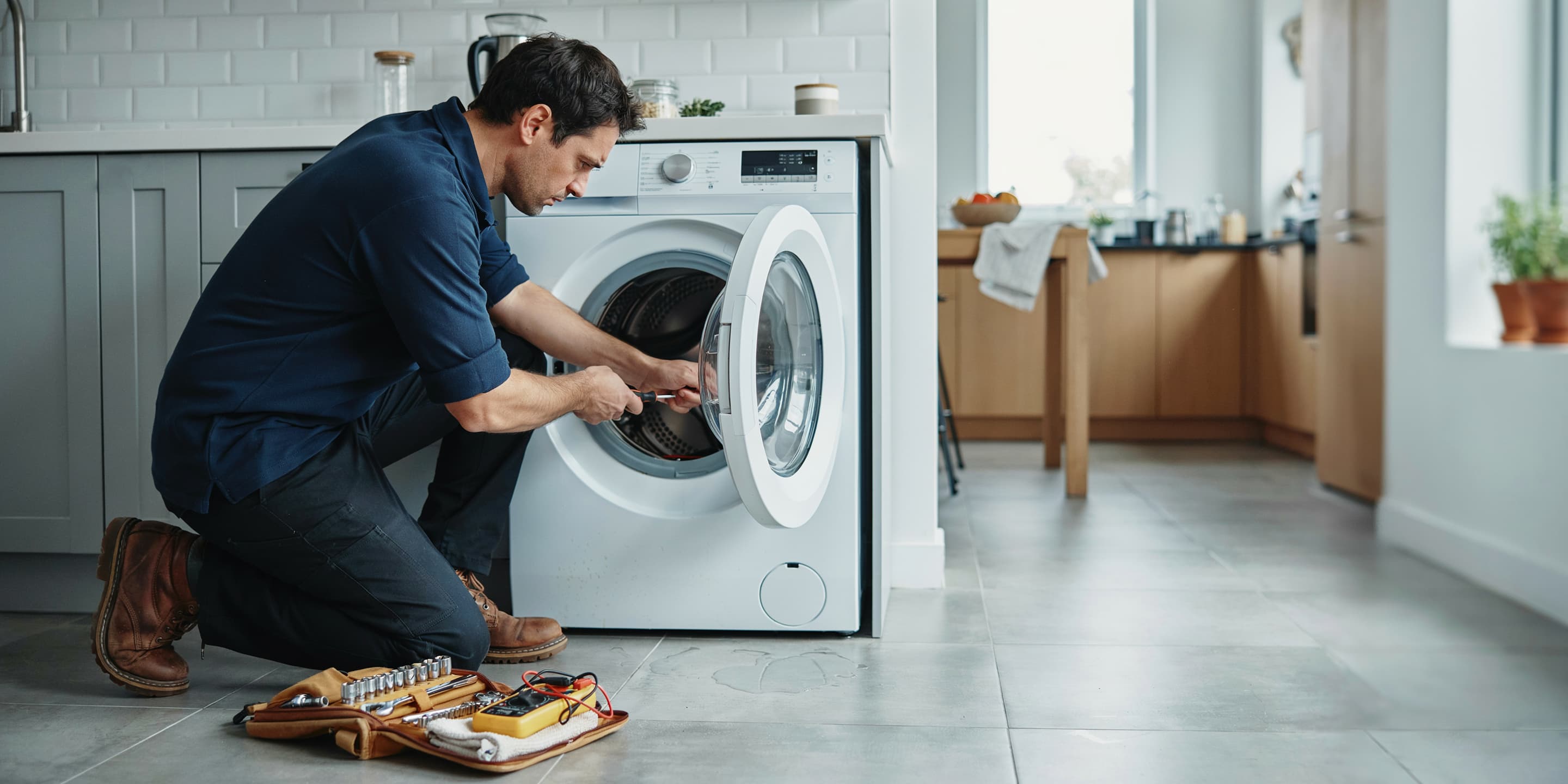
This is the quiet killer for technicians and owner-operators. You cannot answer the phone with both hands inside a furnace. Every missed call during a service window is, statistically, a lead that responded faster to your competitor than you did to them. And because almost nobody leaves a voicemail, you never even see the lead you lost — there's no record, no callback to make, just a quiet gap in your week.
Why "we'll call them back tonight" fails
The instinct to batch callbacks at the end of the day feels efficient. It is the opposite. By evening, the 5-minute window closed hours ago, the prospect has fielded calls from two other contractors, and your callback lands as the third voice on a problem they have likely already solved. We break the full economics of this down in our piece on the real cost of missed calls for HVAC and plumbing businesses.
The hidden tax on your ad spend
Slow response doesn't just cost you the organic, word-of-mouth lead. It quietly inflates your cost per acquired customer on every paid channel. If you respond fast enough to close one in three paid leads instead of one in six, you have effectively cut your cost per job in half without touching your ad budget. Speed-to-lead is one of the only levers that improves your marketing ROI without spending an extra dollar.
Closing the gap without hiring a 24/7 receptionist
The honest tension for a small service business: the math demands a 5-minute response, but no human team can hold that standard across job sites, evenings, weekends, and lunch breaks. Hiring a round-the-clock front desk is rarely affordable for a shop running a handful of trucks.
This is where automation has quietly changed the equation, and consumers are ready for it. Twilio's 2025 State of Customer Engagement report found that 43% of consumers want 24/7 AI customer support — they would rather get an immediate, competent answer from an AI assistant than wait on a human callback that may never come. The stigma around "talking to a robot" has faded for routine tasks like booking a service window or confirming a quote.
What an instant-response system does
- Answers every call and form in seconds, day or night, so no lead rolls to a dead voicemail.
- Qualifies the job — asks the right questions about urgency, job type, and timeline so emergencies get prioritized over next-quarter quote requests.
- Books the appointment directly into your calendar and texts a confirmation before the prospect can call a competitor.
- Runs the follow-up sequence automatically if the lead doesn't pick up the first time, so a single missed connection doesn't become a lost job.
We cover how this works specifically for the trades in our guide to the AI voice receptionist for home-service businesses, and how to structure persistence in automated follow-up sequences for contractors. The principle is the same one the research keeps confirming: be first, be fast, and never let an inbound inquiry sit.
Where to start
You do not need to overhaul your whole operation to win on speed. Start by measuring your current response time honestly — pull your last 20 inbound leads and clock how long each one waited. Most owners are stunned by the answer. Then close the biggest gaps first: missed calls during service windows and after-hours inquiries, which together account for the majority of lost opportunities.
From there it's a question of coverage. Decide who — or what — answers when your team physically can't, set a hard standard that no inbound lead waits more than five minutes, and make sure every channel (calls, forms, ads, chat) feeds one place that triggers an instant response. The businesses that win the speed game aren't working harder than you. They've just removed the gaps where leads fall through.
If you want a fast read on where your business is leaking leads right now, our free instant audit checks your response coverage in minutes, and an AI receptionist can plug the 24/7 gap without adding payroll.
Ready to stop losing jobs to whoever calls back first? Get a free, no-obligation review of your lead response and follow-up at thevalleymarketinggroup.com/audit, or call us directly at (623) 343-3141. We'll show you exactly where the speed gaps are and what closing them is worth.
How Valley Can Help
We Help Businesses Like Yours Get More Leads — and Close More of Them
The Valley Marketing Group is a Phoenix-based marketing agency specializing in AI-powered lead generation, paid advertising, and web development for local service businesses.
- Google Ads & paid search — campaigns built to generate qualified leads, not just clicks
- AI phone receptionist — never miss a call or lead while you're on the job
- Website design & development — WordPress, Webflow, Shopify, WooCommerce
- SEO content & local search — rank for the searches your customers are already making