Google Ads for Remodeling Contractors: 2026 CPL Benchmarks and Strategy
June 16, 2026 · The Valley Marketing Group
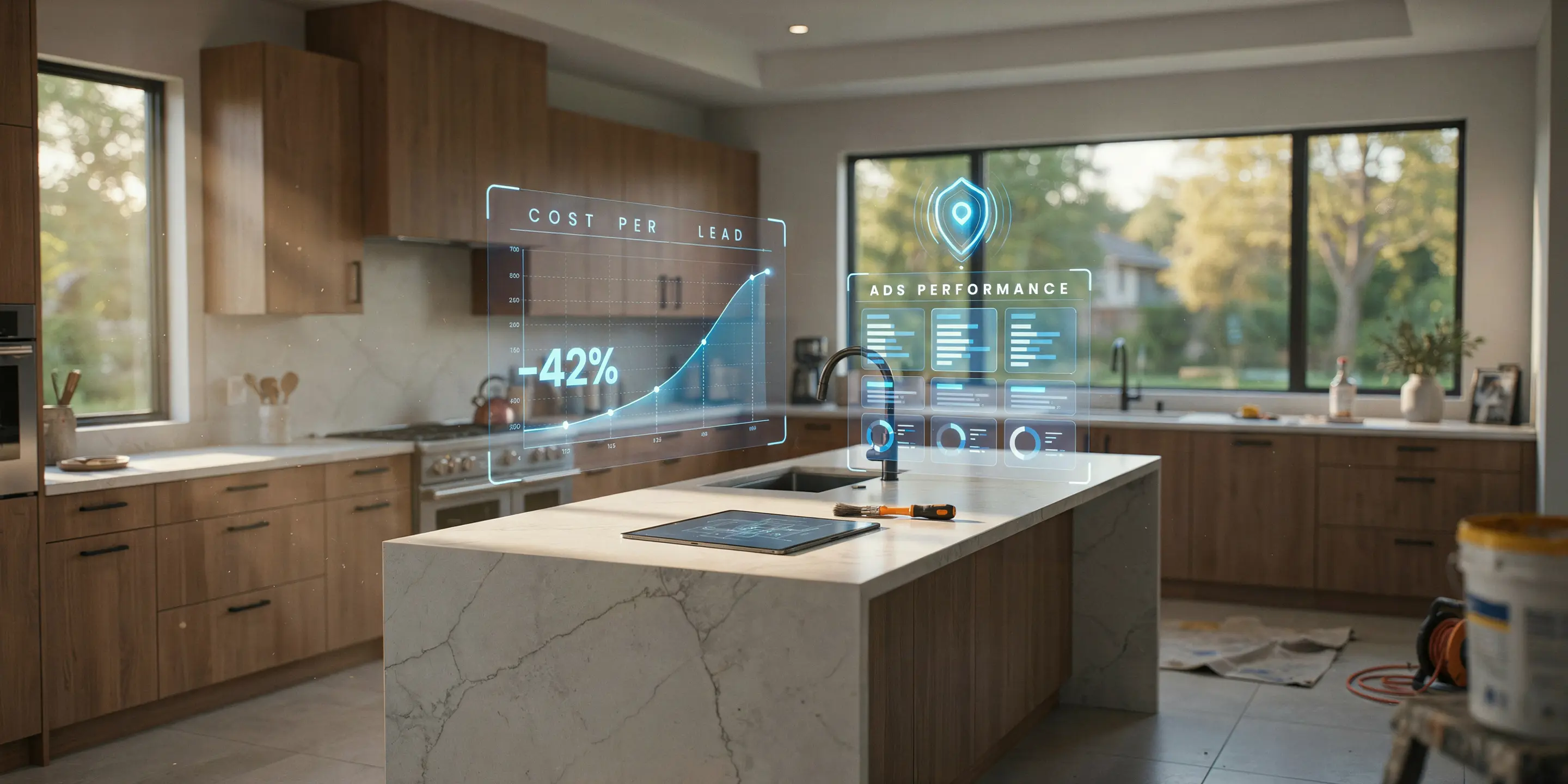
Remodeling Google Ads have one thing that scares most contractors when they first see the benchmarks: the cost per lead. At $90 to $400 depending on market and campaign maturity, these numbers look high—until you look at what's on the other side.
A kitchen remodel averages $25,000-$75,000. A bathroom renovation runs $10,000-$40,000. If your Google Ads campaign generates even one quality project per month from a $2,500 ad spend, the math is obviously favorable. The challenge is building a campaign structure that reaches actual buyers and converts them into consultations—not just clicks from people looking for ideas and ballpark estimates.
Why Remodeling Google Ads Work Differently
An HVAC or plumbing ad targets emergency intent. "Fix this now, here's my card." Remodeling targets planning intent. The buyer has been thinking about this for months, has probably browsed Houzz and Pinterest for ideas, and wants to find a contractor they trust before committing to a five-figure project.
That longer sales cycle changes several things:
- Your landing page needs to do more work than a simple "call us now" page
- Your follow-up process matters far more—most remodeling leads don't close on first contact
- The cost per lead looks high until you measure cost per booked project, which is where the real number lives
- Trust signals—completed project photos, years in business, licensing, reviews from homeowners—are conversion factors, not nice-to-haves
Real CPL Benchmarks for 2026
Here's what to actually expect from remodeling Google Ads, based on 2026 data from Built Right Digital's bathroom remodeling benchmark analysis and their kitchen remodeling cost guide:
- Entry-level campaigns (new to ads, broad targeting, first 60 days): $120–$180 cost per lead
- Growth-stage campaigns (3-6 months of optimization): $90–$140 cost per lead
- Scaled campaigns (12+ months, strong Quality Score, tight structure): $70–$110 cost per lead
Cost per click for kitchen and bath keywords runs $8–$18 depending on local competition. A landing page converting at 8–12% produces leads at the lower end of these ranges. At 4–6% conversion rate, you're in the upper range.
Now run the math on close rate. Well-qualified remodeling consultations—prospects with real budgets and defined projects—close at 30–50%. If you spend $200 per lead and close 40% of consultations, your cost per booked project is $500. On a $30,000 kitchen remodel, that's 1.7% of project revenue going to acquisition. Most remodelers would take that math indefinitely.
Starting Budget: What You Actually Need
A realistic starting budget for a local remodeling contractor new to Google Ads is $1,500–$3,000 per month. This gives Google's bidding algorithm enough daily spend to gather data and optimize. In competitive metro markets—Phoenix, Dallas, Los Angeles, Chicago—expect $3,000–$6,000 monthly to compete effectively against established advertisers for high-intent keywords.
Starting below $1,000/month for remodeling isn't worth doing. You won't get enough weekly clicks to gather real optimization data, and you'll conclude that Google Ads doesn't work when the real problem was insufficient budget. The $1,500–$3,000 range is a floor, not a target.
Campaign Structure That Reaches Actual Buyers
Don't mix repair keywords with remodeling keywords in the same campaign. These audiences are completely different and need separate management. Build separate campaigns for:
- Kitchen remodeling: "kitchen renovation cost," "kitchen remodel contractor [city]," "kitchen cabinet replacement," "full kitchen remodel near me"
- Bathroom remodeling: "bathroom renovation near me," "bathroom remodel cost," "shower replacement contractor," "master bathroom remodel"
- Additions and whole-home: "home addition contractor," "room addition cost," "primary bedroom addition," "whole home renovation"
Use phrase and exact match keywords primarily—broad match bleeds budget fast in remodeling campaigns. Build a negative keyword list from day one. Exclude: "DIY," "ideas," "inspiration," "Houzz," "Pinterest," "how to," "cheap," and anything that signals someone is researching rather than hiring. Without a strong negative list, you'll pay for a lot of clicks from people who have no intention of calling a contractor.
Landing Pages That Convert Remodeling Prospects
A remodeling prospect needs more reassurance before filling out a form than an emergency-services customer does. Your campaign landing page needs:
- Five or more before/after project photos specific to the service you're advertising (kitchen photos on the kitchen campaign landing page—not a generic portfolio)
- Your contractor license number and state, visible above the fold
- Years in business and which neighborhoods or cities you regularly work in
- Three to five detailed testimonials with project type, neighborhood, and homeowner first name
- One clear call to action: "Get a free estimate," not three competing CTAs
- A response time promise: "We'll contact you within one business day"
If your campaign traffic lands on your homepage, you're converting at half the rate you could be. Each campaign needs its own landing page with message match—the keyword someone searched should connect directly to what they see when they land.
Want more like this?
Get our monthly newsletter — real marketing tips for service businesses. No fluff, unsubscribe anytime.
Ready to talk now? Get a free 24-hour audit instead →Follow-Up Is Where Remodeling Jobs Close
Most remodeling leads don't close on first contact. They request a consultation, get an estimate, and then go quiet for 3-8 weeks while they compare options, discuss with a spouse, and finalize budget. The contractors who follow up consistently win the job. The ones who send one estimate email and wait, lose it.
Our follow-up sequence agent runs this automatically after every consultation: estimate sent, follow-up sequence starts. Touchpoints go out at days 3, 7, 14, and 30 with different messaging—answering common pre-project questions, sharing related project photos, offering to revisit the estimate if budget changed. Most remodelers don't follow up this consistently because it takes time in an already busy schedule. The automation does it without adding to your plate.
A CRM that tracks every lead, every consultation, and every estimate status is essential at this job value level. Our CRM automation agent keeps lead status current and flags anyone who hasn't been contacted in more than a week. A $45,000 project that slips because no one followed up is the most expensive lead you'll ever pay for.
How Long Before You See Results
Remodeling Google Ads take longer to mature than service call campaigns. Plan for 90 days before drawing conclusions. Month one is largely algorithmic learning—Google is figuring out which searches produce form fills, you're identifying which keywords to exclude, and your landing page is getting its first real conversion test.
By month three you should have a stable CPL and a sense of your close rate. By month six, a well-structured campaign should be profitable. If you're not seeing meaningful improvement by month three, the problem is almost always campaign structure, landing page conversion rate, or follow-up process—not the channel.
If you want a second opinion on your current remodeling ad setup—or help building one from scratch that's structured for high-ticket jobs from the start—book a free 24-hour audit. We'll review the campaign architecture, landing page, and follow-up process and tell you exactly where the leak is.
Many remodeling contractors also handle outdoor projects — see our 2026 landscaping Google Ads cost data if that's part of your service mix.
Want to know what is actually broken on your site?
We audit your website, your Google Business Profile and your ad account, then send you a written report inside 24 hours. No pitch, no pressure — you get the plan whether you hire us or not. Start your free audit, see what we charge, or call (623) 343-3141 and talk to a person.
We are based in Phoenix and work with service businesses across the Valley — Mesa, Gilbert, Chandler, Tempe, Scottsdale and Phoenix.
Sources
- Built Right Digital – Google Ads Cost for Bathroom Remodelers: 2026 Benchmarks
- Built Right Digital – Kitchen Remodeling Google Ads Cost | Lead Generation
Related reading
Everything Valley Does
AI marketing agents and full website builds — all under one roof.
Serving service businesses across the Phoenix Valley
Free tools
How Valley Can Help
We Help Businesses Like Yours Get More Leads — and Close More of Them
The Valley Marketing Group is a Phoenix-based marketing agency specializing in AI-powered lead generation, paid advertising, and web development for local service businesses.
- Google Ads & paid search — campaigns built to generate qualified leads, not just clicks
- AI phone receptionist — never miss a call or lead while you're on the job
- Website design & development — WordPress, Webflow, Shopify, WooCommerce
- SEO content & local search — rank for the searches your customers are already making
Google Ads Causing Trouble?
We'll look at your Google Ads account for free and show you where budget is being wasted, what needs fixing, and where the best opportunities are.
No generic report. No obligation.
Get My Free Audit