The Real Math on Missed Calls for HVAC and Plumbing Companies
April 28, 2026 · The Valley Marketing Group
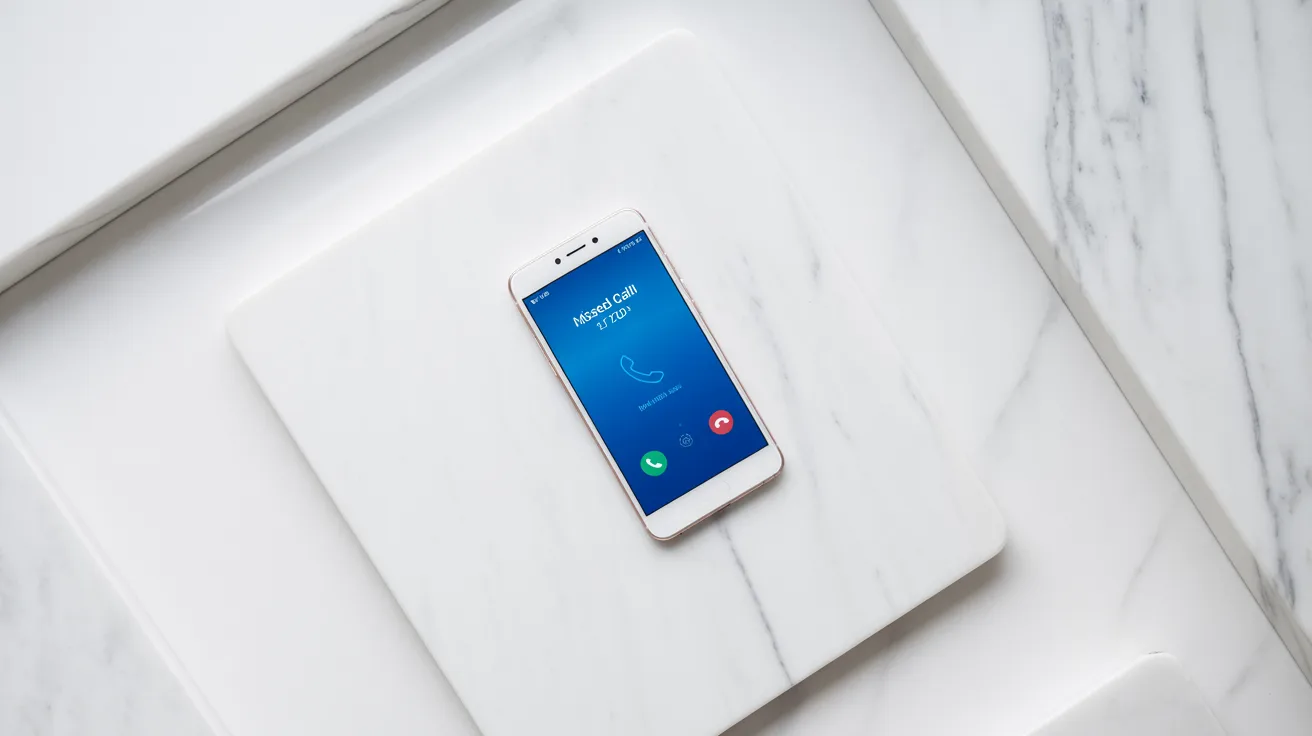
It's June in Glendale. The overnight low is 91 degrees. Your phone rang 14 times between 8 PM and 6 AM, and you know this only because you checked your call log the next morning — the calls you missed while sleeping. Each one represents a homeowner whose AC was failing. Each one is a job that went somewhere else.
Most service business owners have a vague sense that they're losing money to missed calls. What they don't have is the actual number. And the number, when you see it, has a way of making the cost of any solution look trivial.
This post is about doing the math honestly. Not worst-case math designed to scare you into buying something — real math, based on Phoenix-area call volume data, industry booking rates, and average ticket values for HVAC and plumbing. We'll walk through it step by step so you can plug in your own numbers at the end.
Phoenix Summer Call Surge
During June–August, inbound HVAC call volume in Maricopa County increases 340% compared to winter months. The surge is concentrated in the evening hours when homeowners return home to hot houses.
This is the highest-value window in your entire business year — and most companies answer less than 5% of it live.
The Industry Data: This Isn't Just a Phoenix Problem
Before we get to the local numbers, it's worth grounding this in what the broader home-services industry already knows. The leak isn't a Valley quirk — it's structural, and it's measurable nationally.
According to call-tracking firm Invoca, 27% of calls to home-services businesses go unanswered, and fewer than 3% of callers sent to voicemail leave a message. Read that twice. More than a quarter of the people trying to give you money never reach a human — and almost none of them bother with voicemail. They simply hang up and dial the next company in the search results.
That reframes the whole problem. A missed call is not a deferred conversation you'll pick up later. For 97 out of 100 unanswered callers, it's a permanent, silent loss — no message, no second chance. In Phoenix's triple-digit summer, where the next company is a two-second tap away, that ratio only gets worse.
Speed-to-Lead: Why the First Sixty Seconds Decide the Job
The missed-call problem is really a sub-problem of a larger one: speed to lead. How fast you respond to an inbound contact is one of the single biggest predictors of whether you win the work — and the research here is stark.
The landmark Lead Response Management study (Oldroyd, conducted with researchers at MIT and Kellogg) found that responding within 5 minutes versus 30 minutes makes you 100x more likely to make contact and 21x more likely to qualify the lead. Not 21% more likely. Twenty-one times. The curve falls off a cliff the moment you delay.
Harvard Business Review found the same shape in its own audit of thousands of companies: firms that contacted a lead within an hour were roughly 7x more likely to qualify it — yet only 37% of companies actually responded that fast. The majority were leaving money on the table simply by being slow.
Now apply that to an after-hours AC failure in July. The homeowner isn't filling out a form and waiting patiently. They're sweating, they're calling, and if you don't answer live, your "response time" isn't five minutes — it's nine hours until you see the voicemail the next morning. By then the job is gone. Speed-to-lead is the entire game, and a phone ringing into the void is the slowest possible response. (We dig deeper into this in our companion piece on why speed-to-lead makes or breaks service businesses.)
Phoenix HVAC Call Volume Data
| Month | Avg Inbound Calls / Company | After-Hours % | Live Answer Rate | Avg Ticket Value |
|---|---|---|---|---|
| January | 31 | 18% | 22% | $210 |
| April | 58 | 26% | 14% | $290 |
| June | 147 | 41% | 4% | $480 |
| July | 189 | 44% | 3% | $530 |
| August | 162 | 42% | 5% | $510 |
Notice how the live-answer rate collapses exactly when call volume and ticket values peak. In January, with light volume, a company answers 22% of calls live. By July — 189 calls, a $530 average ticket — that same company answers 3%. The busiest, most valuable month of the year is the month your phone is most likely to ring unanswered. That inverse relationship is the entire problem in one table.
The Math — July for an Average Phoenix HVAC Company
And remember — the 73% voicemail-abandonment figure we use here is actually conservative next to Invoca's national number, which puts message-leaving at under 3% of voicemail-bound callers. The hole in your bucket is, if anything, bigger than the table above suggests.
What a Missed Call Actually Sounds Like
Want us to look at your setup?
Free 24-hour audit. No pitch, no pressure.
Case Study: Mesa Plumbing Company, Water Heater Replacements
"I thought I was running a lean operation. Turns out I was just running an operation with a giant hole in the bucket. Fixing after-hours calls was the highest-ROI thing I've done in five years."— Owner, Mesa plumbing company
Why Phoenix Is Different
- Triple-digit heat changes the urgency calculus: A broken furnace in Minnesota can wait until morning. A broken AC in Phoenix in July cannot. The after-hours HVAC call is a genuine emergency with genuine urgency — and callers will not wait for a callback.
- Pool equipment adds a second peak: Pool pump and heater failures spike in spring and fall, adding a second round of after-hours call volume that many HVAC/plumbing crossover companies miss entirely.
- The competition is organized: Large franchises and private equity-backed service companies in Phoenix are already deploying AI answering. Independent operators who don't adapt are at an asymmetric disadvantage.
- High population density means high call volume: With 4.9 million people in Maricopa County, even a small geographic service area generates substantial call volume during peak season.
3 Objections We Hear
The Fix: Answer Every Call, Day or Night
The reason missed calls are so expensive is also the reason they're so fixable: the problem isn't your team's effort, it's the physical limits of a human staff that has to sleep. You can't out-hustle 189 July calls with two people and an answering machine. But you no longer have to.
An AI voice receptionist answers every call live — 11 PM on a Sunday in July included — qualifies the caller, quotes from your pricing logic, and books the job into your calendar before the homeowner can dial a competitor. It scales to your summer surge automatically and costs a fraction of one overnight dispatcher. The appetite is there on the customer side, too: Twilio's 2025 research found that 43% of consumers now want 24/7 AI-powered customer support. Homeowners aren't offended that a machine picked up at midnight — they're relieved someone did. (For the full breakdown of how this works for trades, see our guide to the AI voice receptionist for home services.)
What You Get
- Complete call capture: Every call answered live, every hour, peak season and off-season
- Booking at point of contact: Appointment locked in before the caller can reach a competitor
- Monthly revenue reporting: We show you exactly how many calls were captured and the jobs they produced
- Seasonal surge handling: No staffing up in summer — the AI scales automatically
- Custom pricing logic: Knows your emergency rates, service zones, and job minimums
- No more "we already called someone": The job is yours before the callback window closes
Run Your Own Numbers
Want the real figure for your shop instead of the Phoenix average? Pull last July's call log and grab a free instant audit, or book a full missed-call revenue audit with our team. We'll show you exactly what your unanswered phone is costing — and what capturing it would add.
Call us directly at (623) 343-3141.
After-Hours Call Volume: Inbound service calls received outside of normal business hours (typically 5 PM–8 AM), which represent disproportionately high-urgency and high-value revenue opportunities.
Booking Rate: The percentage of answered calls that result in a scheduled appointment. After-hours booking rates are higher than daytime rates because callers are in active need rather than comparison shopping.
Voicemail Abandonment Rate: The percentage of callers who reach voicemail and do not leave a message, immediately seeking an alternative. Industry data places this at 67–80% for home service businesses — and national call-tracking data from Invoca puts message-leaving at under 3% of voicemail-bound callers.
Speed to Lead: The elapsed time between an inbound inquiry and the business's first live response. Research consistently shows that response within five minutes dramatically outperforms slower follow-up in both contact and qualification rates.
Want to know what is actually broken on your site?
We audit your website, your Google Business Profile and your ad account, then send you a written report inside 24 hours. No pitch, no pressure — you get the plan whether you hire us or not. Start your free audit, see what we charge, or call (623) 343-3141 and talk to a person.
We are based in Phoenix and work with service businesses across the Valley — Mesa, Gilbert, Chandler, Tempe, Scottsdale and Phoenix.
See how an AI receptionist answers every call 24/7, qualifies the caller, and books the job — so your service business never misses another lead.
Everything Valley Does
AI marketing agents and full website builds — all under one roof.
Serving service businesses across the Phoenix Valley
Free tools
How Valley Can Help
We Help Businesses Like Yours Get More Leads — and Close More of Them
The Valley Marketing Group is a Phoenix-based marketing agency specializing in AI-powered lead generation, paid advertising, and web development for local service businesses.
- Google Ads & paid search — campaigns built to generate qualified leads, not just clicks
- AI phone receptionist — never miss a call or lead while you're on the job
- Website design & development — WordPress, Webflow, Shopify, WooCommerce
- SEO content & local search — rank for the searches your customers are already making
Leads Falling Through the Cracks?
We'll show you exactly how many calls and leads you're losing right now, and what an AI agent would recover for your business.
No generic report. No obligation.
Get My Free Audit